Buy live-casino.eu ?
We are moving the project
live-casino.eu .
Are you interested in purchasing the domain
live-casino.eu ?
domain@kv-gmbh.de · 0541-91531010
Buy live-casino.eu ?
What is a real Japanese blue orchid?
A real Japanese blue orchid is a type of orchid that has been genetically modified to produce blue flowers. Traditional orchids come in a variety of colors, but blue is not a natural color for orchids. Through genetic modification, scientists have been able to create blue orchids by introducing genes from other plants that produce blue pigments. These blue orchids are a popular choice for floral arrangements and are often used to symbolize rarity and uniqueness. **
Is my orchid broken?
Orchids are delicate plants and can be easily damaged, but they are not typically considered "broken" in the same way that objects can be. If your orchid is showing signs of damage such as wilting leaves, yellowing or browning of the leaves, or a lack of new growth, it may be a sign that something is wrong with the plant. It's important to assess the care conditions such as light, water, and humidity levels to determine the cause of the issue and take appropriate steps to help your orchid recover. **
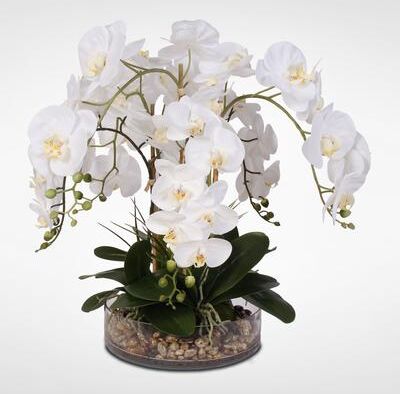
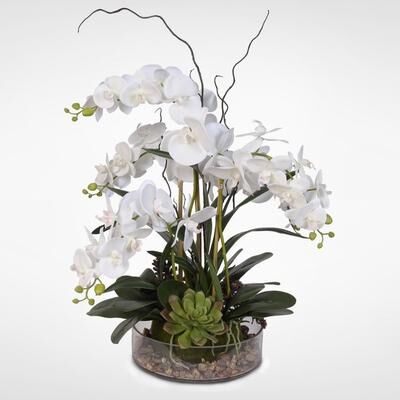
Similar search terms for Orchid
Top-Angebote
Products related to Orchid:
-
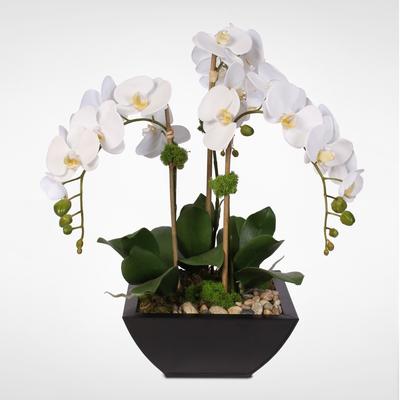
Real Touch Orchid Flower Arrangement in Stone Cement Pot - WhiteOur dreamy real touch phalaenophsis orchids meet their match in this romantic arrangement. Together the silk florals are showcased against the dark tones of the greenery and the artificial succulents.376,31 $*Shipping: 0,00 $Secure redirect to the provider
-
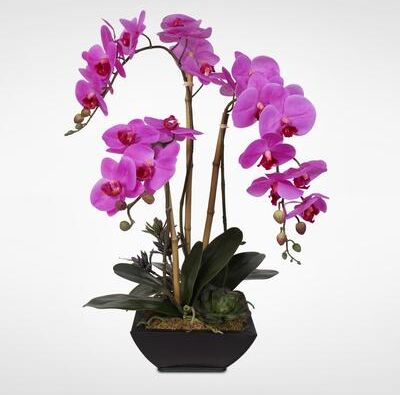
Real Touch Phalaenopsis Silk Orchid Arragnement in a Metal Pot - PurpleThis elegant floral arrangement simply wows with its vivid color and stylish design. A touch of greenery and leaves at the bottom provide contrast while the whole look is simple and elegant, lending i...235,44 $*Shipping: 0,00 $Secure redirect to the provider


-
Is my orchid moldy?
To determine if your orchid is moldy, look for any fuzzy, discolored patches on the leaves or roots. Mold on orchids is usually white or grayish in color and can spread quickly if not treated. If you suspect mold on your orchid, gently wipe the affected areas with a cotton swab dipped in rubbing alcohol to remove it. Ensure proper air circulation and avoid overwatering to prevent mold growth in the future. **
-
What are orchid stems?
Orchid stems are the long, slender, and often leafless structures that support the flowers and leaves of the orchid plant. They are typically green and can be either upright or trailing, depending on the species. Orchid stems are important for providing structural support to the plant and for transporting water and nutrients to the flowers and leaves. In some orchid species, the stems also store water and nutrients, helping the plant to survive in dry or nutrient-poor environments. **
-
Is the orchid still salvageable?
Without more information about the specific condition of the orchid, it is difficult to determine if it is still salvageable. Factors such as the extent of damage, the health of the plant, and the care it receives moving forward will all play a role in its potential for recovery. It is best to assess the orchid's current state and provide appropriate care to give it the best chance of survival. **
-
Why is the orchid dying?
The orchid may be dying due to a lack of proper care and maintenance. This could include issues such as overwatering, underwatering, inadequate sunlight, or incorrect temperature levels. It is important to assess the plant's environment and make adjustments accordingly to help revive the orchid. Additionally, checking for any signs of disease or pests is also crucial in determining the cause of the orchid's decline. **


Is the orchid almost dead?
Without more context or information, it is difficult to determine if the orchid is almost dead. Signs that an orchid may be dying include yellowing or wilting leaves, lack of new growth, and a mushy or rotten smell coming from the roots. It is important to assess the overall health of the plant, including its roots, leaves, and overall appearance, to determine if it is close to death. If in doubt, it is best to consult with a plant expert or horticulturist for guidance on how to revive the orchid. **
What does orchid science mean?
Orchid science refers to the study and research of orchids, a diverse and complex family of flowering plants. This field of science encompasses various disciplines such as botany, horticulture, genetics, and ecology, all focused on understanding the biology, diversity, and cultivation of orchids. Orchid science also involves conservation efforts to protect endangered orchid species and their natural habitats. Overall, orchid science aims to deepen our knowledge and appreciation of these beautiful and unique plants. **
Top-Angebote
Products related to Orchid:
-
What is a real Japanese blue orchid?
A real Japanese blue orchid is a type of orchid that has been genetically modified to produce blue flowers. Traditional orchids come in a variety of colors, but blue is not a natural color for orchids. Through genetic modification, scientists have been able to create blue orchids by introducing genes from other plants that produce blue pigments. These blue orchids are a popular choice for floral arrangements and are often used to symbolize rarity and uniqueness. **
-
Is my orchid broken?
Orchids are delicate plants and can be easily damaged, but they are not typically considered "broken" in the same way that objects can be. If your orchid is showing signs of damage such as wilting leaves, yellowing or browning of the leaves, or a lack of new growth, it may be a sign that something is wrong with the plant. It's important to assess the care conditions such as light, water, and humidity levels to determine the cause of the issue and take appropriate steps to help your orchid recover. **
-
Is my orchid moldy?
To determine if your orchid is moldy, look for any fuzzy, discolored patches on the leaves or roots. Mold on orchids is usually white or grayish in color and can spread quickly if not treated. If you suspect mold on your orchid, gently wipe the affected areas with a cotton swab dipped in rubbing alcohol to remove it. Ensure proper air circulation and avoid overwatering to prevent mold growth in the future. **
-
What are orchid stems?
Orchid stems are the long, slender, and often leafless structures that support the flowers and leaves of the orchid plant. They are typically green and can be either upright or trailing, depending on the species. Orchid stems are important for providing structural support to the plant and for transporting water and nutrients to the flowers and leaves. In some orchid species, the stems also store water and nutrients, helping the plant to survive in dry or nutrient-poor environments. **
Similar search terms for Orchid
-
Real Touch Orchid Flower Arrangement in Stone Cement Pot - WhiteOur dreamy real touch phalaenophsis orchids meet their match in this romantic arrangement. Together the silk florals are showcased against the dark tones of the greenery and the artificial succulents.376,31 $*Shipping: 0,00 $Secure redirect to the provider
-
Real Touch Phalaenopsis Silk Orchid Arragnement in a Metal Pot - PurpleThis elegant floral arrangement simply wows with its vivid color and stylish design. A touch of greenery and leaves at the bottom provide contrast while the whole look is simple and elegant, lending i...235,44 $*Shipping: 0,00 $Secure redirect to the provider
-
Is the orchid still salvageable?
Without more information about the specific condition of the orchid, it is difficult to determine if it is still salvageable. Factors such as the extent of damage, the health of the plant, and the care it receives moving forward will all play a role in its potential for recovery. It is best to assess the orchid's current state and provide appropriate care to give it the best chance of survival. **
-
Why is the orchid dying?
The orchid may be dying due to a lack of proper care and maintenance. This could include issues such as overwatering, underwatering, inadequate sunlight, or incorrect temperature levels. It is important to assess the plant's environment and make adjustments accordingly to help revive the orchid. Additionally, checking for any signs of disease or pests is also crucial in determining the cause of the orchid's decline. **
-
Is the orchid almost dead?
Without more context or information, it is difficult to determine if the orchid is almost dead. Signs that an orchid may be dying include yellowing or wilting leaves, lack of new growth, and a mushy or rotten smell coming from the roots. It is important to assess the overall health of the plant, including its roots, leaves, and overall appearance, to determine if it is close to death. If in doubt, it is best to consult with a plant expert or horticulturist for guidance on how to revive the orchid. **
-
What does orchid science mean?
Orchid science refers to the study and research of orchids, a diverse and complex family of flowering plants. This field of science encompasses various disciplines such as botany, horticulture, genetics, and ecology, all focused on understanding the biology, diversity, and cultivation of orchids. Orchid science also involves conservation efforts to protect endangered orchid species and their natural habitats. Overall, orchid science aims to deepen our knowledge and appreciation of these beautiful and unique plants. **
* All prices are inclusive of VAT and, if applicable, plus shipping costs. The offer information is based on the details provided by the respective shop and is updated through automated processes. Real-time updates do not occur, so deviations can occur in individual cases. ** Note: Parts of this content were created by AI.