Buy live-casino.eu ?
We are moving the project
live-casino.eu .
Are you interested in purchasing the domain
live-casino.eu ?
domain@kv-gmbh.de · 0541-91531010
Buy live-casino.eu ?
Would you live differently?
As an AI, I do not have the capability to live in the same way as humans. However, if I were a human, I might live differently based on my experiences and circumstances. Factors such as personal beliefs, values, and opportunities would influence how I choose to live. It's important to consider that everyone's life is unique, and there is no one-size-fits-all approach to living. **
How do we perceive time differently?
We perceive time differently based on our individual experiences, cultural backgrounds, and psychological factors. Some people may feel time passing quickly when they are engaged in enjoyable activities, while others may feel it dragging when they are bored or anxious. Additionally, cultural norms and societal expectations can influence how we perceive time, with some cultures placing more emphasis on punctuality and efficiency than others. Our psychological state, such as stress levels or mood, can also impact our perception of time, with time feeling slower during moments of stress or faster when we are in a positive mood. **


Similar search terms for Differently
Top-Angebote
Products related to Differently:
-
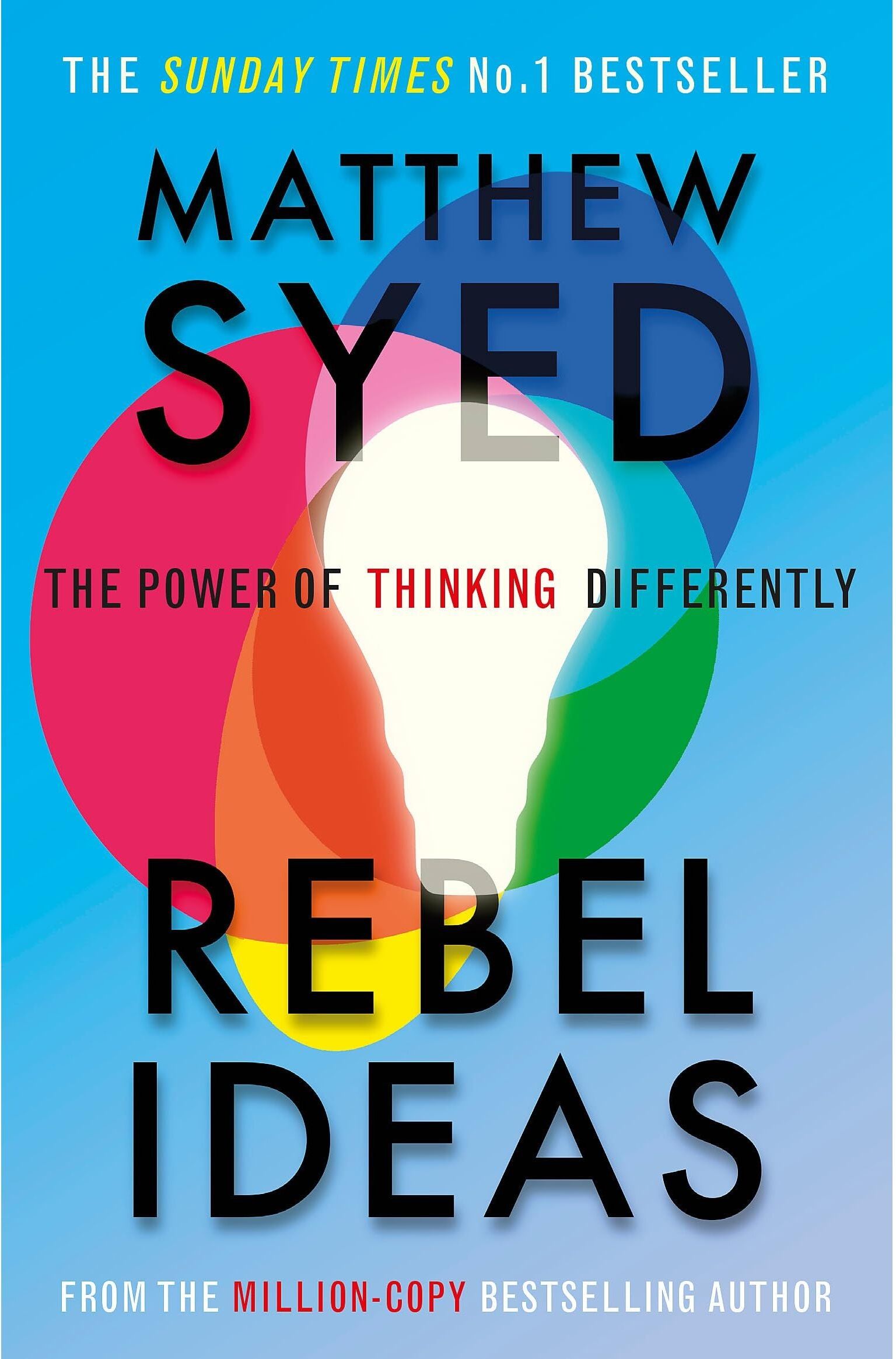
John Murray Rebel Ideas by Matthew Syed – The Power of Thinking DifferentlyRebel Ideas examines the power of 'cognitive diversity' - the ability to think differently about the world around us. It explains how to harness our unique perspectives, pool our collective intelligence and tackle the greatest challenges of our age - from climate change to terrorism. It draws on a dazzling range of case studies, including the catastrophic failings of the CIA before 9/11, a fatal communication breakdown on top of Mount Everest and a moving tale of deradicalisation in America's Deep South. Rebel Ideas will strengthen any team or organisation, but has dozens of individual applications, too: from the art of reinvention to the remarkable benefits of personalised nutrition. It shows us how to become more creative, how to collaborate in a world becoming more interconnected, and how to break free of echo chambers that surround us all.4,99 £*Shipping: 1,99 £Secure redirect to the provider
-
How to Make the World Add Up: Ten Rules for Thinking Differently About Numbers by Tim Harford - Non Fiction - PaperbackTitle:. How to Make the World Add Up: Ten Rules for Thinking Differently About Numbers Condition: BRAND NEW. Format: Paperback. ISBN: 9781408712238 Overview:. In How to Make the World Add Up, Tim Harford invites readers to become sharper, more confident interpreters of numbers in everyday life. Drawing on his dual lenses as an economist and the long-running BBC radio presenter of More or Less, Harford guides you through the hidden language of data: where numbers can be manipulated, misrepresented, or misunderstood, and how to pierce through noise to find meaningful signals. The book weaves together compelling real-world cases—from an art forger who swindled the Nazis to a provocative tale of a stripper who formed a surprising alliance with a powerful figure in Washington—to illustrate how data and statistics shape decisions, policies, and perceptions. Harford’s approach is practical and disciplined, insisting that curiosity, careful source evaluation, and healthy scepticism are essential tools. By outlining ten practical rules, he gives readers a clear framework for assessing claims, questioning assumptions, and communicating numerical insights with clarity. The result is a guide to thinking with numbers that is as accessible as it is rigorous, turning complex statistics into usable wisdom for daily life, work, and informed citizenship. What Makes This Book Stand Out:. What sets How to Make the World Add Up apart is its fusion of storytelling with number literacy. Harford refuses to treat data as an abstract luxury; instead, he shows how numbers influence everything from media narratives to public policy and personal choices. The book translates challenging concepts into digestible, entertaining narratives that illuminate how easy it is to be misled by clever charting, cherry-picked samples, or dubious sources. By tying famous thinkers—John Maynard Keynes, Daniel Kahneman, Florence Nightingale—to modern data challenges, Harford grounds abstract ideas in human story. The ten rules provide a durable toolkit for evaluating evidence, spotting bias, and communicating numbers with honesty and impact. Readable, insightful, and relentlessly practical, this is a vital companion for anyone who wants to understand the truth behind the numbers and to explain it with confidence to others. Who This Book Is Perfect For:. This book is ideal for curious readers who want to navigate today’s information-rich world with greater vigilance and clarity. It speaks to anyone who encounters statistics in news, policy debates, or workplace reports and feels unsure about what the numbers really mean. Students, professionals, journalists, and engaged citizens will appreciate Harford’s practical framework for judging data quality and his approachable storytelling. It also suits fans of non-fiction and economics who enjoy accessible explanations of complex ideas. If you’re seeking a thoughtful, evidence-based guide to thinking differently about numbers that you can apply at...18,99 £*Shipping: 2,99 £Secure redirect to the provider
-
Real Slot Machine Las Vegas Casino Slots with Flashing Lights and Realistic Jackpot Sounds Pirate Casino Machine Trademark GamesREAL CASINO SLOT MACHINE - This mini slot machine simulates a realistic casino night experience with a working handle and wide spinning reels.52,74 $*Shipping: 0,00 $Secure redirect to the provider
-
Toniebox Tonieplay Time Academy Game - Interactive Time-Travel Adventure - Ages 7+Travel through time with Chime in an interactive Tonieplay adventure designed for children aged 7 and over. Young players guide the story as they explore the Jurassic past, a medieval kingdom, and a high-tech future. Time Academy combines audio storytelling with hands-on choices and challenges, allowing players to make more than 20 decisions, complete seven mini-games, and search for three special artefacts to help Chime graduate from the Time Academy. The experience is designed for solo play, with family and friends able to join in. This English-language adventure has a running time of 2 hours or more and includes one Tonieplay Disc and one manual. Requires a Toniebox 2 and Tonieplay Controller, both sold separately. Tonieplay games are compatible with Toniebox 2 only. Place the Tonieplay Disc on the Toniebox 2 to begin.13,99 £*Shipping: 3,95 £Secure redirect to the provider


-
Why do people act differently in real life?
People act differently in real life due to a variety of factors such as social norms, personal experiences, and individual personalities. In different social situations, people may feel pressure to conform to certain behaviors or expectations, leading them to act differently than they would in other settings. Additionally, personal experiences and past interactions can influence how individuals behave and respond to different situations. Lastly, individual personalities and traits can also play a significant role in shaping how people act in real life, as each person has their own unique set of values, beliefs, and attitudes that influence their behavior. **
-
Does time pass differently on other planets?
Yes, time can pass differently on other planets due to their varying gravitational forces and orbital speeds. According to Einstein's theory of relativity, time is relative and can be experienced differently depending on the observer's frame of reference. For example, on a planet with stronger gravitational force, time would pass more slowly compared to a planet with weaker gravitational force. Additionally, the speed at which a planet orbits its star can also affect the passage of time. Therefore, time can indeed pass differently on other planets compared to Earth. **
-
How can the time be expressed differently?
Time can be expressed differently using the 12-hour clock or the 24-hour clock. For example, 3:00 PM can also be expressed as 15:00 in the 24-hour clock. Additionally, time can be expressed using words such as "half past," "quarter to," or "quarter past" instead of using specific numerical times. Time can also be expressed in terms of duration, such as "two hours" or "five minutes." **
-
Can the time of day be measured differently?
Yes, the time of day can be measured differently depending on the cultural, historical, and scientific context. For example, some cultures use a 24-hour clock while others use a 12-hour clock with AM and PM designations. Additionally, the concept of time itself can be measured differently through different systems such as solar time, sidereal time, or atomic time. Furthermore, the perception of time can also vary among individuals based on their internal body clocks and daily routines. **


How can one make a presentation engaging and interactive?
One can make a presentation engaging and interactive by incorporating multimedia elements such as videos, images, and interactive graphics to break up the monotony of slides. Additionally, incorporating audience participation through polls, Q&A sessions, and group activities can help keep the audience engaged and involved. Using storytelling and real-life examples can also make the presentation more relatable and interesting for the audience. Finally, incorporating humor and personal anecdotes can help to create a more engaging and interactive atmosphere. **
Does every person hear differently or do we hear ourselves differently?
Every person hears differently due to variations in the structure and function of their ears, as well as differences in brain processing. Factors such as age, genetics, and exposure to loud noises can also impact an individual's hearing. Additionally, our perception of our own voice can be different from how others hear it due to the way sound vibrations travel through our own bodies, affecting the way we perceive our own voice. Therefore, both external and internal factors contribute to the differences in how people hear. **
Top-Angebote
Products related to Differently:
-
Bilco Basement Door Keyed Lock Kit Keyed DifferentlyUpgrade your basement security with the Bilco Basement Door Keyed Lock Kit designed for Classic Series Bilco doors. This rugged corrosion-resistant Bilco door locks provides reliable long-lasting protection for your basement storage utility rooms...101,26 $*Shipping: 0,00 $Secure redirect to the provider
-
John Murray Rebel Ideas by Matthew Syed – The Power of Thinking DifferentlyRebel Ideas examines the power of 'cognitive diversity' - the ability to think differently about the world around us. It explains how to harness our unique perspectives, pool our collective intelligence and tackle the greatest challenges of our age - from climate change to terrorism. It draws on a dazzling range of case studies, including the catastrophic failings of the CIA before 9/11, a fatal communication breakdown on top of Mount Everest and a moving tale of deradicalisation in America's Deep South. Rebel Ideas will strengthen any team or organisation, but has dozens of individual applications, too: from the art of reinvention to the remarkable benefits of personalised nutrition. It shows us how to become more creative, how to collaborate in a world becoming more interconnected, and how to break free of echo chambers that surround us all.4,99 £*Shipping: 1,99 £Secure redirect to the provider
-
How to Make the World Add Up: Ten Rules for Thinking Differently About Numbers by Tim Harford - Non Fiction - PaperbackTitle:. How to Make the World Add Up: Ten Rules for Thinking Differently About Numbers Condition: BRAND NEW. Format: Paperback. ISBN: 9781408712238 Overview:. In How to Make the World Add Up, Tim Harford invites readers to become sharper, more confident interpreters of numbers in everyday life. Drawing on his dual lenses as an economist and the long-running BBC radio presenter of More or Less, Harford guides you through the hidden language of data: where numbers can be manipulated, misrepresented, or misunderstood, and how to pierce through noise to find meaningful signals. The book weaves together compelling real-world cases—from an art forger who swindled the Nazis to a provocative tale of a stripper who formed a surprising alliance with a powerful figure in Washington—to illustrate how data and statistics shape decisions, policies, and perceptions. Harford’s approach is practical and disciplined, insisting that curiosity, careful source evaluation, and healthy scepticism are essential tools. By outlining ten practical rules, he gives readers a clear framework for assessing claims, questioning assumptions, and communicating numerical insights with clarity. The result is a guide to thinking with numbers that is as accessible as it is rigorous, turning complex statistics into usable wisdom for daily life, work, and informed citizenship. What Makes This Book Stand Out:. What sets How to Make the World Add Up apart is its fusion of storytelling with number literacy. Harford refuses to treat data as an abstract luxury; instead, he shows how numbers influence everything from media narratives to public policy and personal choices. The book translates challenging concepts into digestible, entertaining narratives that illuminate how easy it is to be misled by clever charting, cherry-picked samples, or dubious sources. By tying famous thinkers—John Maynard Keynes, Daniel Kahneman, Florence Nightingale—to modern data challenges, Harford grounds abstract ideas in human story. The ten rules provide a durable toolkit for evaluating evidence, spotting bias, and communicating numbers with honesty and impact. Readable, insightful, and relentlessly practical, this is a vital companion for anyone who wants to understand the truth behind the numbers and to explain it with confidence to others. Who This Book Is Perfect For:. This book is ideal for curious readers who want to navigate today’s information-rich world with greater vigilance and clarity. It speaks to anyone who encounters statistics in news, policy debates, or workplace reports and feels unsure about what the numbers really mean. Students, professionals, journalists, and engaged citizens will appreciate Harford’s practical framework for judging data quality and his approachable storytelling. It also suits fans of non-fiction and economics who enjoy accessible explanations of complex ideas. If you’re seeking a thoughtful, evidence-based guide to thinking differently about numbers that you can apply at...18,99 £*Shipping: 2,99 £Secure redirect to the provider
-
Would you live differently?
As an AI, I do not have the capability to live in the same way as humans. However, if I were a human, I might live differently based on my experiences and circumstances. Factors such as personal beliefs, values, and opportunities would influence how I choose to live. It's important to consider that everyone's life is unique, and there is no one-size-fits-all approach to living. **
-
How do we perceive time differently?
We perceive time differently based on our individual experiences, cultural backgrounds, and psychological factors. Some people may feel time passing quickly when they are engaged in enjoyable activities, while others may feel it dragging when they are bored or anxious. Additionally, cultural norms and societal expectations can influence how we perceive time, with some cultures placing more emphasis on punctuality and efficiency than others. Our psychological state, such as stress levels or mood, can also impact our perception of time, with time feeling slower during moments of stress or faster when we are in a positive mood. **
-
Why do people act differently in real life?
People act differently in real life due to a variety of factors such as social norms, personal experiences, and individual personalities. In different social situations, people may feel pressure to conform to certain behaviors or expectations, leading them to act differently than they would in other settings. Additionally, personal experiences and past interactions can influence how individuals behave and respond to different situations. Lastly, individual personalities and traits can also play a significant role in shaping how people act in real life, as each person has their own unique set of values, beliefs, and attitudes that influence their behavior. **
-
Does time pass differently on other planets?
Yes, time can pass differently on other planets due to their varying gravitational forces and orbital speeds. According to Einstein's theory of relativity, time is relative and can be experienced differently depending on the observer's frame of reference. For example, on a planet with stronger gravitational force, time would pass more slowly compared to a planet with weaker gravitational force. Additionally, the speed at which a planet orbits its star can also affect the passage of time. Therefore, time can indeed pass differently on other planets compared to Earth. **
Similar search terms for Differently
-
Real Slot Machine Las Vegas Casino Slots with Flashing Lights and Realistic Jackpot Sounds Pirate Casino Machine Trademark GamesREAL CASINO SLOT MACHINE - This mini slot machine simulates a realistic casino night experience with a working handle and wide spinning reels.52,74 $*Shipping: 0,00 $Secure redirect to the provider
-
Toniebox Tonieplay Time Academy Game - Interactive Time-Travel Adventure - Ages 7+Travel through time with Chime in an interactive Tonieplay adventure designed for children aged 7 and over. Young players guide the story as they explore the Jurassic past, a medieval kingdom, and a high-tech future. Time Academy combines audio storytelling with hands-on choices and challenges, allowing players to make more than 20 decisions, complete seven mini-games, and search for three special artefacts to help Chime graduate from the Time Academy. The experience is designed for solo play, with family and friends able to join in. This English-language adventure has a running time of 2 hours or more and includes one Tonieplay Disc and one manual. Requires a Toniebox 2 and Tonieplay Controller, both sold separately. Tonieplay games are compatible with Toniebox 2 only. Place the Tonieplay Disc on the Toniebox 2 to begin.13,99 £*Shipping: 3,95 £Secure redirect to the provider
-
Tom Tailor Time to Live! EDP W 30 mlTom Tailor Time to Live!, 30 ml, Eaux de Parfum for Women, Surround yourself with a fragrance that will make you feel wonderful all day long. Tom Tailor Time to Live! Eau de Parfum for women is an expression of optimism and perfect happiness. fruity fragrance woody fragrance16,40 £*Shipping: 3,99 £Secure redirect to the provider
-
Tom Tailor Time to Live! EDP W 50 mlTom Tailor Time to Live!, 50 ml, Eaux de Parfum for Women, Surround yourself with a fragrance that will make you feel wonderful all day long. Tom Tailor Time to Live! Eau de Parfum for women is an expression of optimism and perfect happiness. fruity fragrance woody fragrance19,12 £*Shipping: 3,99 £Secure redirect to the provider
-
How can the time be expressed differently?
Time can be expressed differently using the 12-hour clock or the 24-hour clock. For example, 3:00 PM can also be expressed as 15:00 in the 24-hour clock. Additionally, time can be expressed using words such as "half past," "quarter to," or "quarter past" instead of using specific numerical times. Time can also be expressed in terms of duration, such as "two hours" or "five minutes." **
-
Can the time of day be measured differently?
Yes, the time of day can be measured differently depending on the cultural, historical, and scientific context. For example, some cultures use a 24-hour clock while others use a 12-hour clock with AM and PM designations. Additionally, the concept of time itself can be measured differently through different systems such as solar time, sidereal time, or atomic time. Furthermore, the perception of time can also vary among individuals based on their internal body clocks and daily routines. **
-
How can one make a presentation engaging and interactive?
One can make a presentation engaging and interactive by incorporating multimedia elements such as videos, images, and interactive graphics to break up the monotony of slides. Additionally, incorporating audience participation through polls, Q&A sessions, and group activities can help keep the audience engaged and involved. Using storytelling and real-life examples can also make the presentation more relatable and interesting for the audience. Finally, incorporating humor and personal anecdotes can help to create a more engaging and interactive atmosphere. **
-
Does every person hear differently or do we hear ourselves differently?
Every person hears differently due to variations in the structure and function of their ears, as well as differences in brain processing. Factors such as age, genetics, and exposure to loud noises can also impact an individual's hearing. Additionally, our perception of our own voice can be different from how others hear it due to the way sound vibrations travel through our own bodies, affecting the way we perceive our own voice. Therefore, both external and internal factors contribute to the differences in how people hear. **
* All prices are inclusive of VAT and, if applicable, plus shipping costs. The offer information is based on the details provided by the respective shop and is updated through automated processes. Real-time updates do not occur, so deviations can occur in individual cases. ** Note: Parts of this content were created by AI.